Fundamentals of Natural Food to Heal Your Body [ 7 ]
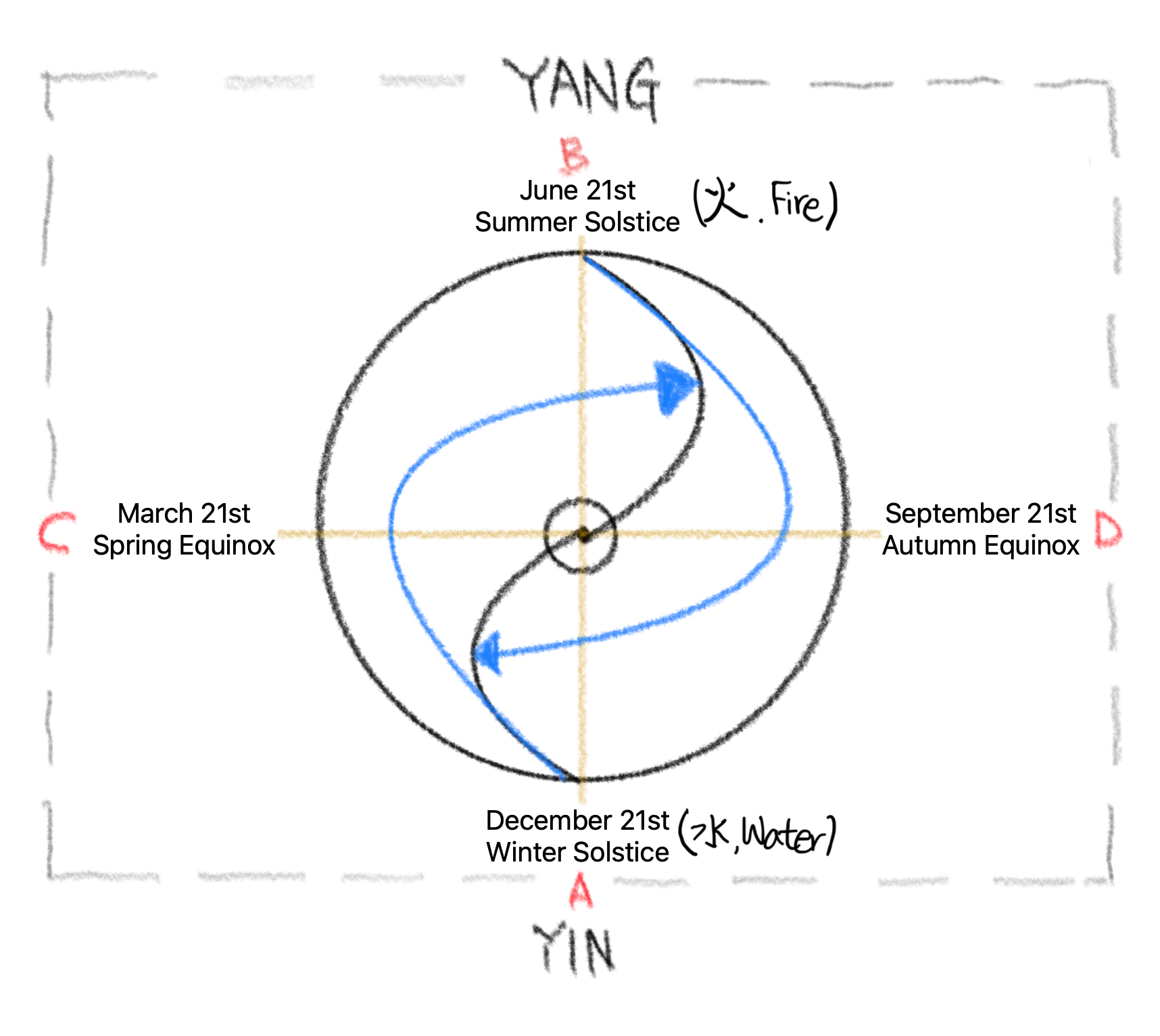
The Seeking of Harmony
Do you remember the image from our last article? You might have wondered, "What is the core message behind this drawing?"
It all comes down to one principle: Harmony.
True health—and indeed, all of life—is impossible without harmony and balance.
When everything is in balance, we feel at peace. The body stays calm and comfortable. But when that harmony breaks, the body works overtime to restore it.
Understanding Adaptation
Let us look at a simple example: heatstroke.
People living in tropical climates rarely suffer from heatstroke. Why? The foods growing around them naturally carry cooling energy, and their bodies have already adjusted to the environment. The same is true for people living in frozen climates—their bodies have adapted to the cold.
On the other hand, people from Northern Europe often suffer more during heatwaves. Their bodies simply cannot adapt to extreme heat quickly enough.
Understanding this single principle will immediately bring practical clarity to your daily life.
Finding Your Center: Zone G
Now, let us go step by step.
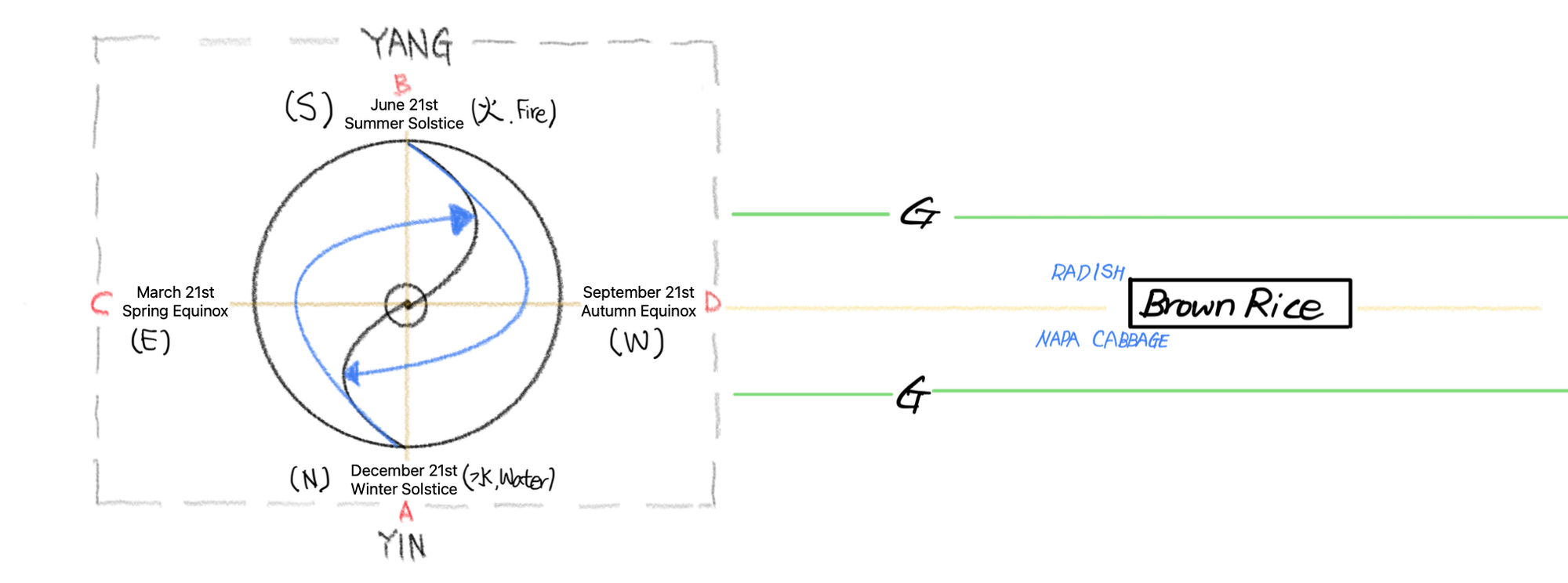
We are all born with different starting points. Some naturally carry more Yang energy, while others carry more Yin energy.
The ideal state is balance—represented by Points C and D on our circle.
Let us draw a boundary around these center points. This zone represents a place of balance, leaning neither too far into Yang nor too far into Yin. Let us call this Zone G.
The ideal goal for our food and our daily life is to stay within Zone G.
The Spectrum of Food
During the heat of summer (Point B), nature naturally offers foods with cooling energy. In the freeze of winter (Point A), we need foods with warming energy.
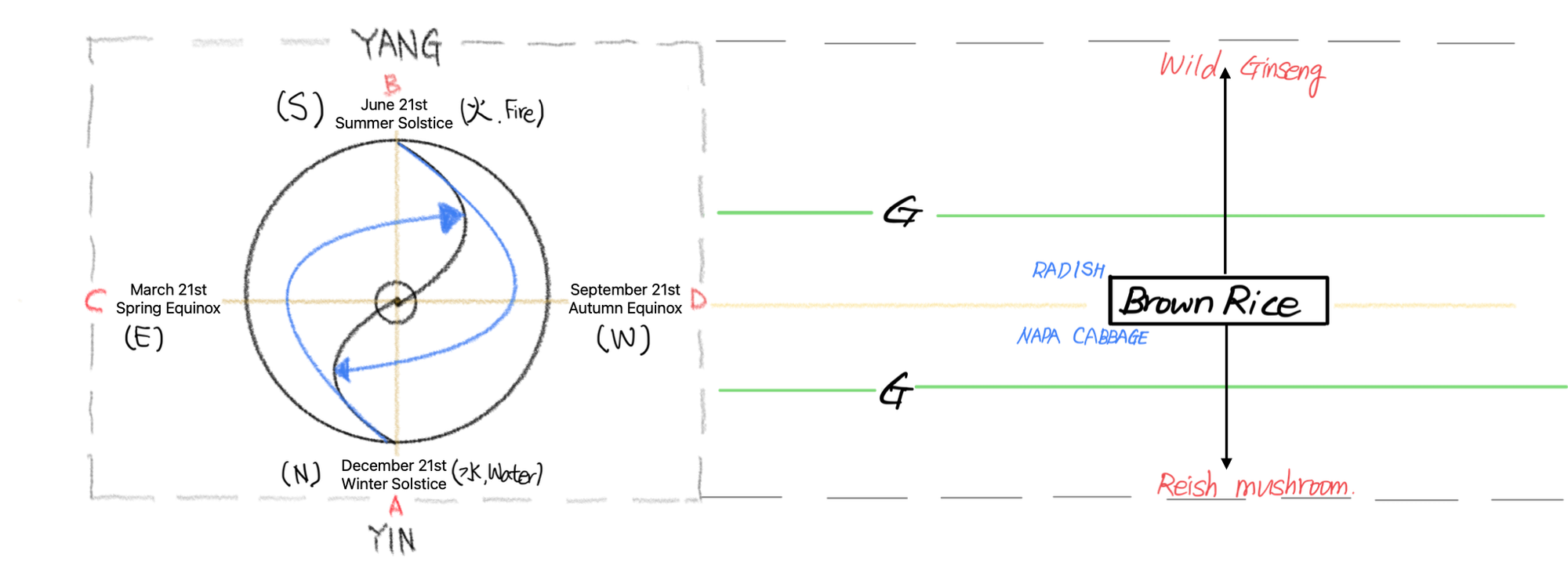
Right at the center of Zone G sits brown rice.
This is why brown rice comes up so often in natural eating and healing diets. Napa cabbage and radish stand right beside brown rice, supporting this neutral center.
What sits at the extreme ends?
- Extreme Yin: Reishi mushroom
- Extreme Yang: Wild Ginseng
Think about what happens if someone with high internal heat eats wild ginseng. For that person, the ginseng acts like poison. On the flip side, Reishi mushroom acts as a burden to someone with an already cold body.
If someone struggles in winter with a cold constitution, wild ginseng can help restore warmth. If someone struggles in summer with excess heat, Reishi mushroom can help cool them down.
For long-term health, human beings thrive best when building their diet around foods in Zone G.
Identifying Food Energies
If brown rice sits at the center, where does wheat flour sit?
Wheat flour is cooler than brown rice.
Where do bread and pasta fall?
They fall even further into the cooling spectrum.
They naturally cool the body down.
Foods with cooling energy have distinct traits. Fruits and vegetables grown in tropical regions carry cold energy. Vegetables that cool the body usually feature wide, fluttering leaves.
Cooling Foods, Greens, and Shellfish
If Napa cabbage is a neutral food, what about lettuce?
Lettuce belongs in this cooling category because its leaves spread wide and flutter.
What about Napa cabbage and regular cabbage?




![Fundamentals of Natural Food to Heal Your Body [ 12 ]](https://storage.ghost.io/c/8f/00/8f00fdb3-415c-42a4-a5c1-668df117e7f0/content/images/size/w750/2026/08/Gemini_Generated_Image_g37pm4g37pm4g37p-1.jpeg)