[Journey of Salt 05] Salt Supports Digestion
Welcome back to the Journey of Salt.
How do you feel after walking through the first four chapters together?
I hope your perspective on this humble, everyday ingredient has grown just a little deeper and more appreciative.
Among all the seasonings we keep in our kitchens, salt is perhaps the most easily misunderstood. It is everywhere, often hiding quietly inside the processed sauces and packaged meals we consume daily. Today, I want to walk alongside you into the ancient wisdom of Ayurveda to explore the true energy, variety, and healing power of salt.
Ancient Ayurvedic texts thoughtfully categorized salt into five distinct types, known as Pancha Lavana. Let’s look at how this ancient wisdom translates to the ingredients we bring into our modern kitchens.
- Saindhava Lavana (Rock Salt): Formed over millions of years as ancient oceans transformed into towering mountains, this is regarded by Ayurveda as the absolute finest of all salts. It carries a precious, warming energy that brings a beautiful balance to the body without overheating it. You might recognize this as the pink rock salt that became incredibly popular recently. However, as global demand surged, the focus shifted toward large-scale industrial harvesting. This heavy production has changed the pristine nature of the salt and the local environment it comes from. It reminds us to be mindful consumers, carefully tracing the origins of what we place on our tables.
- Samudra Lavana (Sea Salt): This is the salt we know best, created by evaporating seawater under the sun. In our modern world, the oceans have become quite polluted, making it increasingly difficult to find truly pure sea salt. If I were to offer an alternative, a wonderful option is traditional boiled salt. By slowly simmering sea salt in a cauldron for many hours, most impurities gently wash away. Deeply roasted salt is another wonderful choice, leaving behind a pure, warming ingredient. Personally, I do not prefer using electric cooking tools like induction cooktops or electric ovens. Applying electric heat can be like severely drying out the ingredients. Instead, cooking with an actual fire is a method that best preserves the countless nutrients and the true essence of the food.
- Sauvarchala Lavana (Black Salt): This special salt carries a distinct, earthy aroma. It is highly valued in traditional practices for waking up a sluggish stomach and gently clearing away digestive discomfort.
- Vida & Audbhida Lavana (Crafted & Earth Salts): These are specialized, highly active salts primarily used as targeted remedies by ancient healers to restore internal flow, rather than for daily cooking.
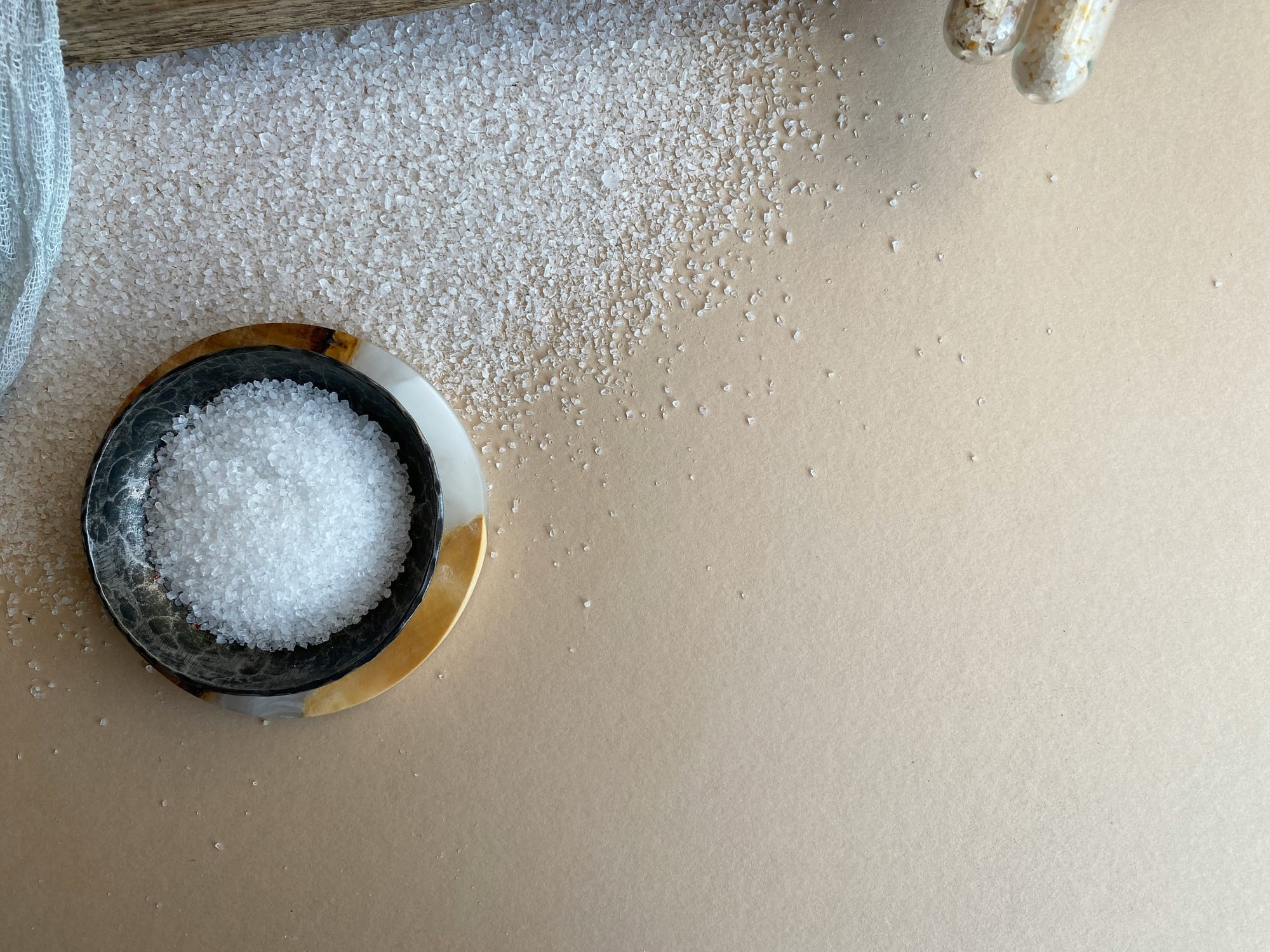
There is one specific thing I really want you to remember: salt helps our body with digestion. When we use pure salt correctly, it actively supports our digestive power.
We will explore digestion more deeply in the future because it is the absolute foundation of our wellness. But for now, just keep in mind that salt helps your body comfortably process the food you enjoy.
When we take in more sodium than our body needs, our system naturally asks for more water to find balance. This extra volume gently presses against our blood vessels, which can raise blood pressure over time. It can also overstimulate the stomach lining, making digestion feel heavy.
For those going through a delicate healing process, adjusting salt intake can be profoundly helpful. Some may even try a completely salt-free routine for a short time. In such situations, I highly recommend seeking detailed consultation and guidance from a professional. If you ever find yourself on that strict path, it can feel quite challenging to enjoy your meals. For those in this situation,
![[Journey of Salt 07] The Quiet Battery Inside Every Cell](https://storage.ghost.io/c/8f/00/8f00fdb3-415c-42a4-a5c1-668df117e7f0/content/images/size/w750/2026/09/photo-1648224394463-4589e018f2c3-1.jpeg)
![[Journey of Salt 06] Fused Salt](https://storage.ghost.io/c/8f/00/8f00fdb3-415c-42a4-a5c1-668df117e7f0/content/images/size/w750/2026/08/photo-1621315892013-f32af7358947-1.jpeg)
![[Journey of Salt 04] Nature's Masterpiece](https://storage.ghost.io/c/8f/00/8f00fdb3-415c-42a4-a5c1-668df117e7f0/content/images/size/w750/2026/08/photo-1677126120848-b839ce10f6ce-1.jpeg)
![[Journey of Salt 03] Where Modern Science and Ancient Wisdom Meet](https://storage.ghost.io/c/8f/00/8f00fdb3-415c-42a4-a5c1-668df117e7f0/content/images/size/w750/2026/08/photo-1659022679092-27b3ee7d8fdb-1.jpeg)
![[Journey of Salt 02] Sea Salt, Rock Salt, And...](https://storage.ghost.io/c/8f/00/8f00fdb3-415c-42a4-a5c1-668df117e7f0/content/images/size/w750/2026/08/photo-1604429295718-0b766e94cbd8-1.jpeg)